The House She Grew Up In
His wife was happy with the house, and it made him glad. She laid ornamental rugs on the wooden floors. She papered the walls with yellow grasscloth wallpaper. Every day, she cleaned the grout on the kitchen backsplash with a sponge.
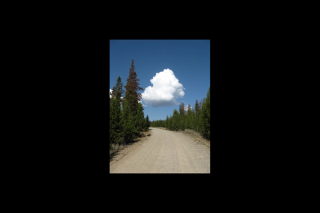
He loved the land behind the house more than he loved the house. The trees were tall and thin. When the wind was strong, the trees moved together. A stream ran through the trees and deer drank from it. Sometimes when it rained, he walked to the trees and walked under them. The leaves blocked the rain and he listened to the sound of the rain on the leaves. When it wasn’t raining, he walked and listened to the sticks and leaves breaking under his boots.
He owned a tractor and he used the tractor to clear paths through the trees. He made maps of paths he wanted cleared and then he cleared them.
If he had acquired the land much earlier, he would have fixed a wagon to the back of the tractor and pulled his daughter along behind him. His daughter was grown now, but he sometimes, all the same, considered what it would be like to take a child with him into the trees. For a child, he thought, the space inside the trees would possess a quality that was not so different from the quality they possessed for him when he stood beneath the trees when it was raining.
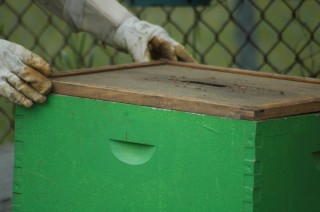
He kept honey bees near the treeline. It was something he had wanted to do for a long time. He built four cedarwood boxes with retractable wooden frames and mounted them on stilts made from pine. Handling the bees, he did not wear special clothing and he did not wear gloves. He behaved calmly and he was not stung. Every day there were some bees dead on the ground, but there were always more alive inside. He watched as they left their boxes and flew to the treeline. He watched as they returned from the trees and found their way between the cracks of the boxes into their hives.
He did not find the world contemptible, and he did not understand people who did. When he stood among the bees, and when the trees and the sky over the trees and the light in the sky compelled him, he felt the tug of a religious inclination. Sometimes he prayed. He prayed quietly and was always afterwards embarrassed. It was like pretending when he tried it, and this made the wonder he felt a trite and containable thing.
Better than praying, he preferred standing among the bees as they came and went from the boxes. He liked watching them crawl along the roofs of their enclosures. When he was standing and watching the bees, he did not worry and he was not anxious that his solitude was self-indulgent.
On the morning of his daughter’s wedding, he tried to prepare words for her. They were sitting together in wicker chairs and she was wearing her dress.
She loved a man and was going to marry him. The man she was going to marry was too good. He was wrongly good. He was good too much of the time and it made him wrong, it made him harmful. When the young man talked about his plans and the way he understood the world, it seemed that he wanted the world to change. He wanted to change the world for the better, and these were aspirations that the girl’s father could not understand.
On the morning of her wedding, the girl’s father wanted to give his daughter something she would remember by saying something true. But when he spoke, his words felt small and trite and they communicated nothing of what was in his head. He felt like crying when he opened his mouth.
“I’m so grateful,” he said, and then he said it again.
Unable to find the right words, he was quiet and his daughter spoke instead. She talked about the house she had grown up in, a squatty cottage-style house with a concrete stoop and a shed in the small yard behind the house. She reached and touched his knee while she spoke.
When she was still young, her father had turned the shed behind the house into a playhouse for his daughter, a playhouse like a large dollhouse for a small girl. He hung ribbons from the ceiling that fell in spirals and caught the light that came through the open window at the back of the shed.
The shed was made from cedarwood boards and the boards were old and splintering and they always smelled like cedarwood.
When it rained, his daughter remembered, she liked to hide in the shed and pretend she was alone even though she knew her father was watching from the window of the cottage. She knew her father was watching, she said, and she knew he would come and take her inside if the rain and the wind grew violent.
____
Frank Lind lives in Iowa.
Donate
This website and publication is supported by the sales of the print issues and by generous donations.Become a sponsor to support New Literature