Midtown Traffic
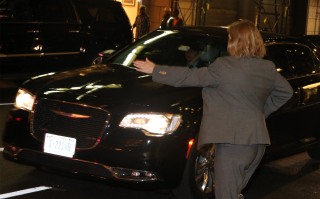
Today while standing in line at the coffee shop I had a familiar moment: a memory flashes and you cringe for your behavior. It was 2010 and I had to drive into Manhattan from the suburbs, where I then lived, to pick up my mother from the ballet. She was with her former boss, a woman named Tina Ramirez, who was the founder of the dance company Ballet Hispanico, where my mother worked for fifteen years. Tina had just retired (really, I later discovered, she was forced out of her position due to age—she didn’t want to stop) and they hadn’t seen each other in a while. There was terrible traffic that evening, and when the performance got out I called my mother and asked if they could meet me a block or two closer to the West Side Highway, because then I could avoid some unnecessary traffic and they would not have to wait around as long. For whatever reason my mother dismissed this request and asked that I come to the theater as planned. Unfortunately, I was right: it took me nearly forty-five minutes to travel the distance of two blocks. I was very irritated. When they got in the car they were both laughing and a little tipsy and all but ignored me, which irritated me even more, given that I was their chauffeur and had been sitting in standstill traffic for their benefit. Eventually Tina asked me something—how I was doing, how was school, what I was up to; an innocuous but well-meaning question, and I responded curtly: “I’m fine.” The car was silent and I knew I had crossed a line, that it was inappropriate for me to be so rude to this elderly woman who had never done anything but kindness for me and my mother. It was Tina, after all, who took a chance on her: my mother had been a ballet dancer in Caracas for twenty years and was soon retiring and looking both to return home to New York City and for the appropriate station for her age in the dance world, which as it happens was as a rehearsal director, the post that Ballet Hispanico then had open in 1996. Tina had known me since I was eight years old and was always fond of me—at times my mother would take me to work with her and I would sit on the floor of the ballet studio while my mother directed her thin young women, all of whom also loved me. I had a happy childhood. When we got home that night my mother chided me for my behavior and I knew she was right. A few days later she spoke to Tina on the phone about something unrelated, and at the end of their conversation, Tina mentioned how hurt she was that I was so rude to her. I felt so embarrassed I could die. But today, as I was walking home from the coffee shop, with the after-image of this memory still dissipating through my body, I found myself laughing. Of the three people in that car that night, I am the only one left alive. My mother died in 2018, Tina in 2022. There is no one else on earth who remembers it, and yet I can still manage—and continue—to feel shame over it. And I think my brain semi-healthy! Every year it becomes unhealthier. But it does make me a little sad: that night was the last time I saw her.
_____
Sebastian Castillo lives in Philadelphia.
Donate
This website and publication is supported by the sales of the print issues and by generous donations.Become a sponsor to support New Literature