Afterwards
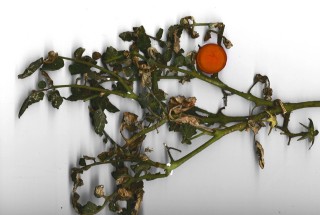
Behind the house lies a fetid garden plot set between corroded square posts. There’s mint, there’s sage, the dying parts of tomatoes. Around them sits shit scooped from the yard and scattered. A metaphor there (a future). Tara squats, her feet sharp beneath, sinking in loose dirt. Bones articulated within tight skin. She exhales.
Not much sustains the day. Tara’s in for three cocktails already, bourbon and lemon, and now she plucks leaves of mint. It is too strong, the wrong species, probably, or not species—the wrong whatever, a mint made to smell, not eat. Above the garden a vague rainless gray hangs low. This is the rubbing of the life she’d hoped to live.
She passes her days as a late arrival at this house by the sea, this house salt-scorched and flooded by the sea. An inch of water stands in the basement, the remains of a storm a month ago. Once she has gathered enough mint, she heads inside. She opens and pours a bottle of gin over the mint. This she lets steep. It is a nod to what comes. Any hope she has is arcane, object-bound.
In one week she will strain the sagging brown leaves for something new to sip. She’ll pour it for her visitors. There have been so many visitors. It is like the old days, to have visitors when she hasn’t for years. With her eyes closed she believes it is the old days.
The garden is suffused with salt. The shit is a last-ditch effort to save what she’s trying to grow. She trusts that sustenance must emerge from what’s rank. In a slick and varnished way she knows that order governs her life. Only lately that order has frayed.
She stares now at the cedar shingles, which were orange at first, darkened with age, finally whitened. It is maybe the salt that lifts off the water, maybe the sun. She had hardly noticed the shingles change. Years of changing, and only now—they cling cracking to the house.
Crumbles of wood gather around the foundation. In 1984, barely married, cement was poured into sand, a home built. Since then the sand has receded, and a foot of cement stands out. She could paint it, have it clad with something. Something, she thinks, but what? She gets lost there for a while, among the memories of this house. That room painted pink, the crib built—it was good, what he did. She can’t even guess how it felt for him. Before she was discharged, he’d painted that room a color he called ecru.
The sky stretches open. Rain falls frankly on her head and her shoulders. Most things she now sees frankly. There are two cats that she feeds, they paw at the backdoor. They are hardly hers, nameless. Drenched and cold she gets the feeling that scares her, the one that comes for a child seated on a roof beneath a purpled night someplace far from a city. Out there, here. Once she gets that feeling she is free for a while. There is no one to say not to pass her days how she does.
She cries. (No one to hole her up, to keep her). Now she keeps herself. When the house was under construction they made the drive often to gauge progress. In that green British sportscar he instructed her on the changes to the land. He knew each parcel and its past. They were always alone on arrival, alone to wander through suggestions of space. What would in time constitute rooms still held emptiness. A kitchen, picture the tile, the marble—something out of so many other somethings. Joists stood exposed where the floorboards would go. The workmen left tools beneath tarps. She strode from slat to slat, looking back at him, knowing that this was his way of making her his own.
Now trays line the inside of the fridge. Casseroles, lasagna. She removes a container of mac and cheese. She keeps it cold and it is all the same texture, like a sponge. She pours another bourbon. She opens a book. She closes it. She stands, and slides the door wide, and follows the pathway to the shore, the beach of round rocks that roll with each step. The water softens on black stone. It is always cold and it is usually gray.
This she takes as a blessing. Lately she awakes from naps she hadn’t meant to take, curled into couches in the sodden parts of her house. Everything is wet. Outside rabbits stand around, and she walks towards them, slowly, each step an ultimatum—she walks until the rabbits flee, and they always do. Tara keeps an eye on the door. Days, days, and the visitors keep coming. They don’t dare phone first. They are slack relatives, transposed from childhood. Newly jarring that she is no longer a child. She wonders how that came to be.
She serves her mint gin to the people who come to pat her shoulder. Who hold her, her who hasn’t been held since—they don’t dare speak it. His name an excision, carved from the air. Just like the baby’s. Her life has become a succession of silences, a mislaid future.
She occupies herself with the sky. She forgets the names of the birds she watches flit in shifting waves of wind. She is thinning and now waiting, always. Weeks go, she eats: crackers, cookies arranged in tins from France. The fridge has since emptied. Sometimes she wanders to the bedroom she could never consider spare. In that ecru room the pink still shows through in the morning light.
She squats atop the ankle-high grass, the soft grass, a prairie girl's hair—shorts at her knees, underwear the same as yesterday’s. She gathers a shovel to scoop what she has laid in the tall grass. She shakes it over the greenery of the garden. She looks up at an ancient sky. Things grow, spindly and starved—they grow. She sniffs. She likes the way the garden smells when wet and rotting.
____
Alexander Fredman lives in Brooklyn, NY.
Donate
This website and publication is supported by the sales of the print issues and by generous donations.Become a sponsor to support New Literature